

Convertible Notes vs Priced Equity Rounds — Which to Use
A convertible instrument (structured in India typically as Compulsorily Convertible Debentures, or CCDs) lets a company raise funds now while deferring the valuation conversation to a future priced round, converting into equity at that point, often with a valuation cap and/or discount rewarding the earlier investor’s
Read More
Succession Planning for Founder-Led Businesses in India
Succession planning for a founder-led or family business should start years before an actual transition is needed, covering ownership transfer structuring, next-generation or management readiness, valuation for equitable distribution among heirs where relevant, and tax-efficient transfer mechanisms. The main paths are family succession (transferring to the
Read More
How to Build a Financial Model Investors Actually Trust
A financial model investors trust is built bottoms-up from documented, defensible assumptions — customer acquisition rate, pricing, retention, unit costs — rather than a top-down revenue target reverse-engineered to look impressive. It should include a three-statement structure (P&L, Balance Sheet, Cash Flow), clearly separated assumptions from
Read More
Virtual CFO Services Canada: Complete Guide for SMEs 2026
A virtual CFO (vCFO) is an outsourced, part-time Chief Financial Officer who provides strategic financial leadership to a business including financial planning, management reporting, cash flow management, investor relations, and financing strategy without the cost of a full-time hire. In Canada, virtual CFO services typically cost
Read More
Financial Forecasting Canada: 3-Year Model, Budget & Cash Flow Guide 2026
Financial forecasting for a Canadian business involves three key tools: a 13-week rolling cash flow forecast (week-by-week cash position), an annual budget by month (revenue, costs, and EBITDA targets vs actuals), and a 3-year financial model (for bank loans, investor presentations, or strategic planning). DKP Global
Read More
Cash Flow Management Canada: Complete Guide for SMEs 2026
Cash flow management for Canadian small businesses centres on monitoring and forecasting the timing of cash inflows (customer payments) and outflows (payroll, rent, CRA remittances, supplier payments). The core tool is the 13-week rolling cash flow forecast updated weekly showing the expected cash balance week by
Read More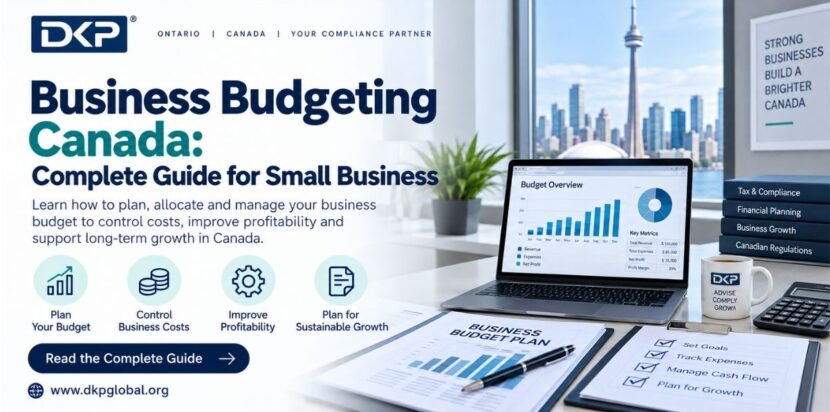
Business Budgeting Canada: Complete Guide for Small Businesses 2026
Business budgeting for Canadian small businesses involves building a 12-month financial plan revenue by service line, direct costs (COGS), overhead by category, EBITDA target, and corporate tax provision by month. DKP Global builds annual budgets using a bottom-up approach from the actual sales pipeline and operational
Read More
Financial Reporting Canada — Management Accounts & KPI Guide 2026
Financial reporting for Canadian businesses encompasses three types of output: monthly management accounts (current-month P&L, balance sheet, cash flow delivered by the 15th, compared to budget and prior year), KPI dashboards (5–7 business-specific metrics tracked monthly with trend lines), and board packs for businesses with investors
Read More
Business Valuation Canada — How to Value Your Company 2026
Business valuation in Canada for most SMEs uses the EBITDA multiple method: Normalized EBITDA × Industry Multiple = Enterprise Value. Industry multiples range from 2.5–4× (construction, retail) to 5–10× (technology, SaaS). Normalized EBITDA adjusts reported earnings for owner salary above or below market rate, personal expenses
Read More
India Canada Financial Planning: Complete Guide for Indian Entrepreneurs 2026
India-Canada financial planning for Indian immigrant entrepreneurs requires integrating two financial systems: Canadian (CRA corporate tax, personal tax, RRSP, TFSA) and Indian (FEMA ODI compliance, RBI APR filing, DTAA dividend withholding, Indian ITR). Every financial decision has implications in both countries. DKP Global provides integrated India-Canada
Read More