

In-House vs Outsourced Accounting — Which Is Right?
Outsourced accounting is generally more cost-effective for businesses under roughly 20-30 employees, since a full-time in-house accountant’s salary and overhead often exceed the cost of an outsourced service handling the same scope. In-house accounting starts making sense once transaction volume, payroll complexity, or the need for
Read More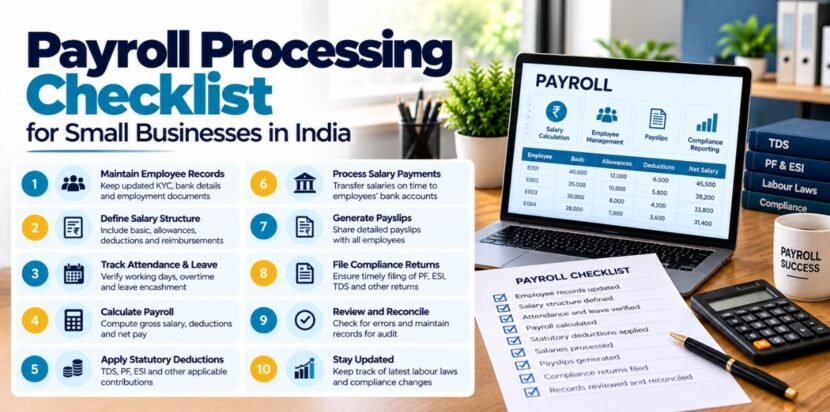
Payroll Processing Checklist for Small Businesses in India
Monthly payroll processing in India involves collecting attendance and leave data, calculating gross salary and statutory deductions (PF, ESI, TDS, Professional Tax), generating payslips, disbursing salaries, and depositing statutory contributions by their respective due dates — PF and ESI by the 15th, TDS by the 7th
Read More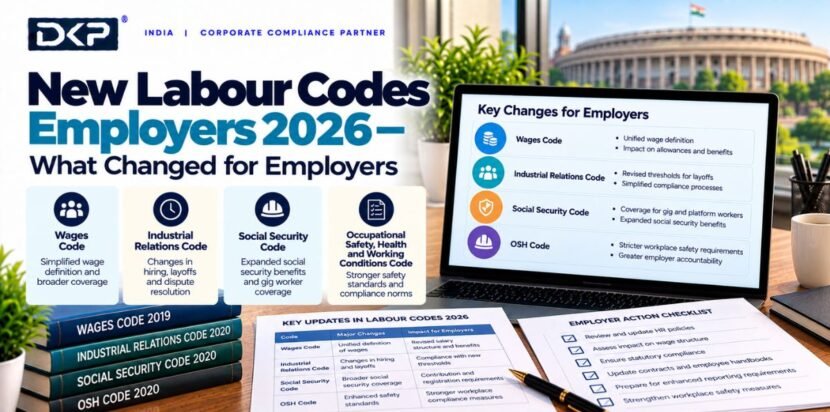
New Labour Codes Employers 2026— What Changed for Employers
India’s four Labour Codes — the Code on Wages, the Code on Social Security, the Industrial Relations Code, and the Occupational Safety, Health and Working Conditions Code — came into effect on 21st November 2026, replacing 29 older central labour laws with a consolidated framework. For
Read More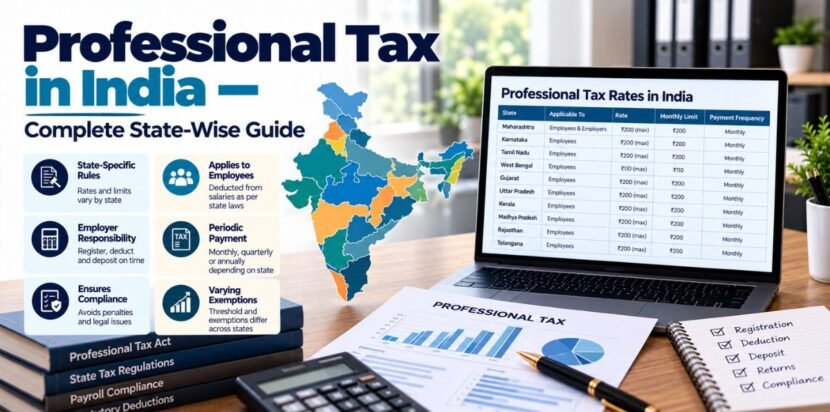
Professional Tax in India — Complete State-Wise Guide
Professional Tax is a state-level tax on employment and trades, deducted by employers from employee salaries and remitted to the state government. Not every Indian state levies it — states like Maharashtra, Karnataka, West Bengal, and Tamil Nadu do, while others like Delhi and Haryana don’t.
Read More
TDS on salary calculation | TDS Section 192 | How to Calculate TDS on Salary
TDS on salary under Section 192 (now under the Income Tax Act 2025, effective 1st April 2026) requires employers to estimate each employee’s total annual taxable income, apply the tax regime they’ve chosen (new regime is the default for FY 2026-27), account for declared deductions, and
Read More
ESI Registration and Compliance in India — Everything Employers Need to Know
ESI (Employees’ State Insurance) registration is mandatory for establishments employing 10 or more persons in most regions — a threshold that has expanded under the new Labour Codes to cover more categories and geographies. It applies to employees earning up to ₹21,000 per month (₹25,000 for
Read More
PF Registration and Compliance in India — Complete Guide (2026)
PF (Provident Fund) registration with the EPFO becomes mandatory once an establishment employs 20 or more persons. Both employer and employee contribute 12% of basic salary plus dearness allowance — the employer’s share splits into 3.67% EPF, 8.33% EPS (Employees’ Pension Scheme), plus EDLI and admin
Read MoreHow to Do Bookkeeping for a Startup in India — Complete Guide
Bookkeeping for an Indian startup means recording every transaction — sales, purchases, expenses, bank and cash entries — consistently, reconciling your bank account monthly, tracking what customers owe you and what you owe vendors, and closing your books into a Profit & Loss statement and Balance
Read MorePost-Incorporation Compliance Checklist — What to Do After Registering (2026)
After incorporating a company in India, you must deposit subscribed share capital and file Form INC-20A (declaration of commencement of business) within 180 days, appoint your first statutory auditor via Form ADT-1 within 30 days, open a company bank account, set up statutory registers and issue
Read More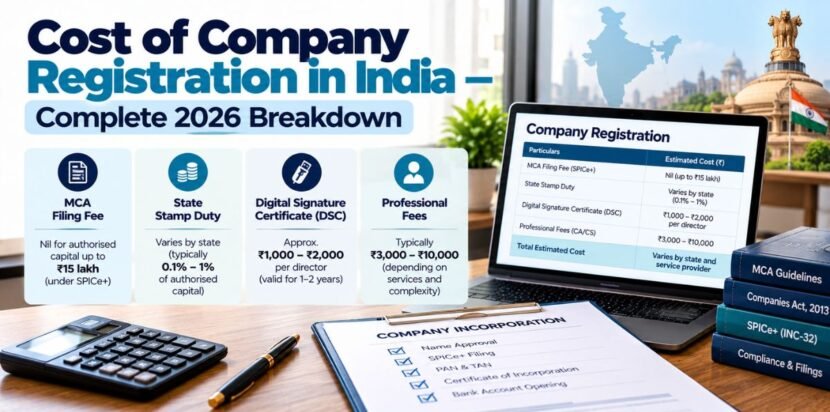
Cost of Company Registration in India — Complete 2026 Breakdown
Registering a company in India typically costs between ₹7,000 and ₹25,000 in the first year, depending on structure — LLP is the cheapest (₹7,000-₹18,000), followed by OPC (₹9,000-₹23,000), with Private Limited Company at the higher end (₹10,000-₹25,000). The biggest variable is state-specific stamp duty, which can
Read More